
Where 'We are' becomes '우린': Hearts2Hearts' 'ICONIC HEART (Korean Ver.)'
The backing track and melody are the same as the Japanese original from August. The English 'We are' turns into Korean, and the "I" and "you" the Japanese lyrics never used show up eight times each.

Also available in:한국어
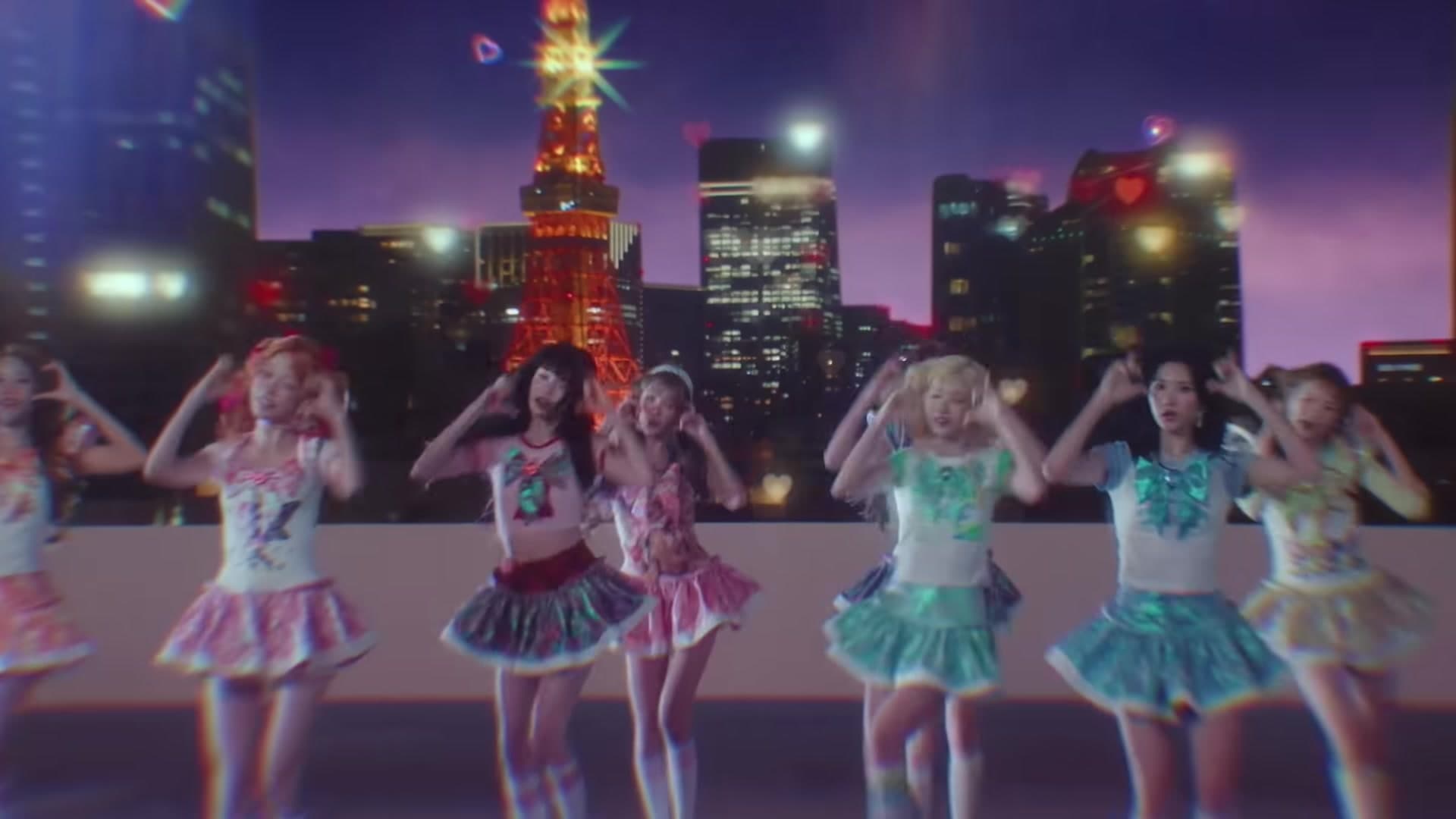
Today's NONOL PICK is 'ICONIC HEART (Korean Ver.)', released by Hearts2Hearts on October 5. The original is a Japanese-language single released in Japan on August 10, and on August 24 a video of the group singing it in a single take went up on the Japanese YouTube channel 'THE FIRST TAKE'. We set the Korean version, out two months later, side by side with the original and measured them. The only thing that changed was the words. But follow where those words changed, and the song sounds a little different. Times are based on the Korean version's audio (3:09).
Same backing track, same places for the voices
Strip the vocals out of the Korean version's audio and the Japanese music video, keep only the backing track, and overlay them 10 seconds at a time: the match score stays around 0.98 from start to finish. The match score shows how alike two sounds are on a scale from 0 to 1, where 1 means exactly the same sound. The points where the voices come in and drop out line up to the half second. Both versions also share a single lyricist, KENZIE.
The song opens at 0:14 with 'How you feeling, Bouncy bouncy'. The English lyrics stay as they are, and only the Japanese parts were carried over into Korean. '그 에너지' ("that energy") at 0:20 is 'そのパワー' ("that power") in the Japanese version. English lines like 'I keep it cooler' and 'Bright, bright, everything shine' don't differ by a single letter.
1:17 · 'We are' becomes '우린'
There's exactly one spot that goes the other way, where English turned into Korean. The end of the chorus, 'We are ICONIC HEART', becomes '우린 ICONIC HEART' ("we're ICONIC HEART") in the Korean version. At 1:17, at 2:08, and in the song's very last word at 2:56, 'We are!' becomes '우린!'. All three times, the Japanese version's 'We' and the Korean version's '우린' land less than 0.2 seconds apart.
The "I" and "you" the Japanese didn't have
In the parts of the original written in Japanese, there isn't a single word for "I." The only word for the other person is 'キミ' ("you"), three times. The Korean version has '나·난·우린·우리' ("I" and "we") eight times and '너·넌' ("you") eight times. The chorus line '星の下で キミとね' ("under the stars, with you") became '별빛 아래 나 그리고 너' ("under the starlight, me and you"), and 'きっと分かる' ("you'll surely know") became '너만 알잖아' ("only you know"). Around 1:33, '暗い夜 でも見える' ("a dark night, but I can see") also turned into '까만 밤 속에 우리만 보여' ("in the pitch-black night, only we can be seen"). Over the same melody, "we" comes up more often.
2:11 · A rewritten bridge
The biggest change is the bridge at 2:11. The Japanese version sings '感じてみて 今よりもっと 誰よりもそばで' ("try to feel it, more than now, closer than anyone"), while the Korean version sings '난 보고 싶어 더 느끼고 싶어 좀 더 가까이 있어 줘' ("I want to see you, I want to feel more, stay a little closer"). A line telling the other person to feel it turns into a line about wanting to see them.
Right after, following '뛰어보자' ("let's jump") at 2:23, the voices drop out for 8 seconds, and everything other than the drums and bass comes forward, about 12dB louder than in the previous chorus. Decibels (dB) measure loudness, and a 10dB difference sounds roughly twice as loud to the ear. At 2:33 the bass comes back in and the final chorus begins, and after the single word '우린!' at 2:56, the backing track plays on without bass for a little over 10 seconds before the song ends. Apple Music
The original music video is a story set in the '魔法部' (magic club) of a school with Japanese signs. Around 1:46 in the video, the members dance together on a rooftop with Tokyo Tower in view. The lead photo is that scene. If you listen to the original knowing which lines changed in Korean, the two versions sound like translations of each other. THE FIRST TAKE video · Original on Apple Music
하츠투하츠Hearts2HeartsICONIC HEART한국어 버전일본어 원곡SM엔터테인먼트노놀 픽
Share
Sources

NONOL Editorial
The NONOL Magazine editorial team — we hear it first, then pass it on.
Keep reading
'lose control' turns into 'full control' by the end: KickFlip's 'Kick Off The Wall'
The second title track from KickFlip's fifth mini album. It starts on the very first line with no intro, goes empty for 3 seconds at 1:28, and flips one lyric in the last chorus.
NONOL Editorial·
Walking in reggae, then rock at 1:09: Biuret × Rhydian Vaughan's 'Tropical Night'
A Mandarin-language single sung by two rock musicians from Korea and Taiwan. After "this city suffocates me," at 1:09 the sound jumps 5 dB and the song turns into what feels like another one.
NONOL Editorial·
From 'you're the pretty one' to 'I'm the pretty one': YENA's 'Dime Girl'
YENA sings the chorus of the Block B original in place of the man who used to sing it. "You are" becomes "I am", the beat is 14% faster, and the song is 43 seconds shorter.
NONOL Editorial·