
A song that speaks with the eyes first — GuGu's 'Eyes of Sorrow'
A band known for youth rock, turning the volume down.


In three lines
- GuGu's 'Eyes of Sorrow' is up at NONOL LIVE.
- It's a stage where a band known for youth rock lowers its voice.
- It's the opposite texture to 'ALL I MESS' from the same session.
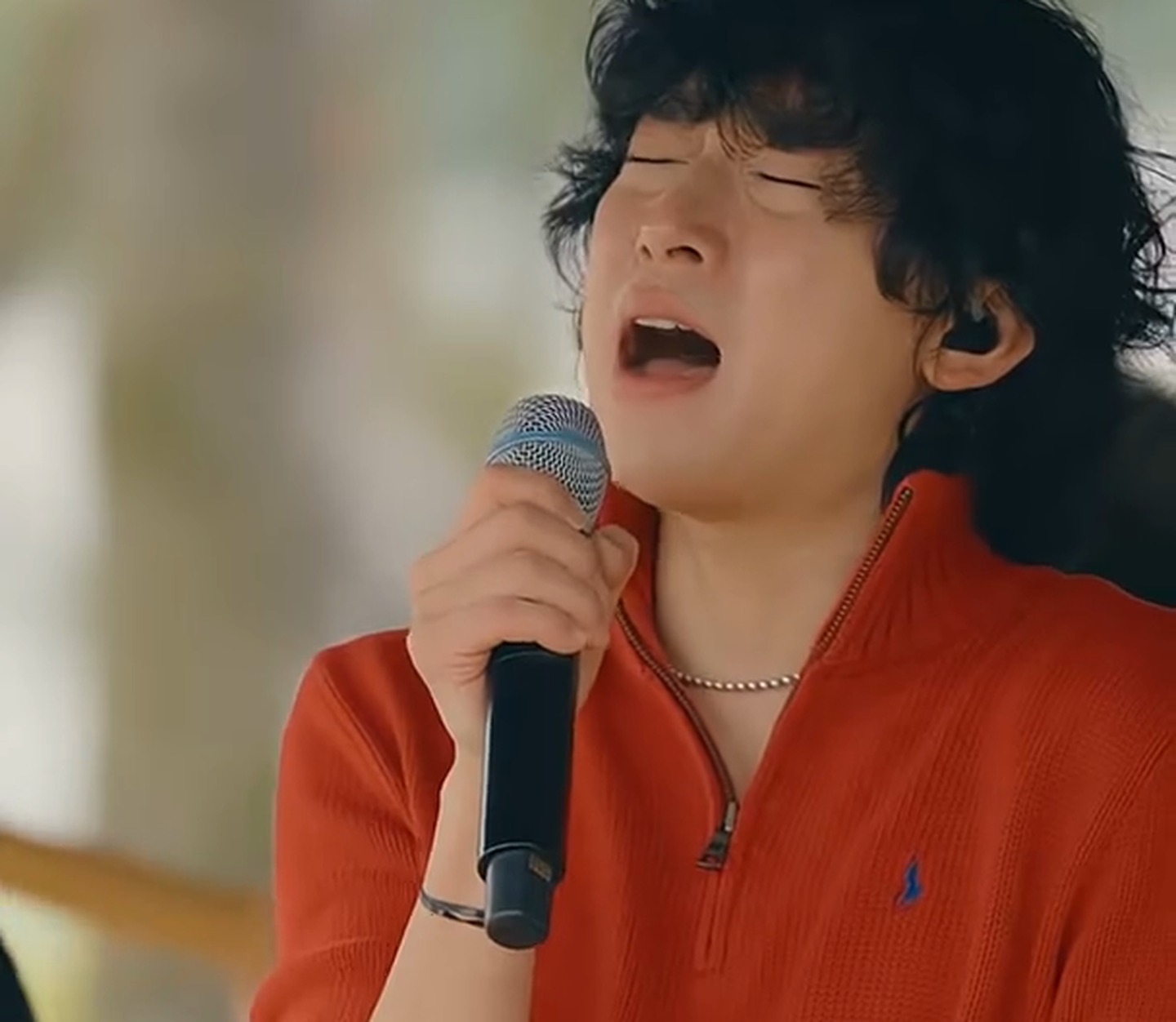
The quieter side
When GuGu came to the playground, the first thing that got around was songs like 'ALL I MESS' — youth rock running without regret, the kind you jump and shout to on stage.
'Eyes of Sorrow' sits on the other side of that. The same band, in the same seat, turning the volume down. When a band goes quiet something gets exposed: the grain of a voice that's usually covered by drums and guitar.
Why the title points at eyes
What the title names isn't the voice. It's the eyes.
There are times a feeling shows on your face before you can say it. The moment you say you're fine and your eyes disagree. This song works that mismatch. Which is why singing it big would collapse it — you can't perform a song that speaks with the eyes using your throat.
Two songs side by side
| ALL I MESS | Eyes of Sorrow | |
|---|---|---|
| Temperature | Hot and fast | Low and slow |
| What steps forward | The band's sound | The voice and the eyes |
| What's left | The breath after running | What went unsaid |
That one band sings both of these in the same session is the good part. It means even a group filed under 'youth rock' has hours when it wants to be quiet.
What it means to hear it at the playground
There's almost no editing at NONOL LIVE, so on a song like this the picture does more work. When the singing goes quiet you naturally start seeing the face.
If you've only heard 'Eyes of Sorrow' as audio, watch the video this time. Why the title is about eyes gets explained on screen first. And that explanation arrives faster than the lyrics.
There's also a particular tension when a band plays a quiet song. They're holding back a sound that could get loud at any moment. That restraint stays inside the song, so it never goes slack even while staying soft.
Rooms like this suit fewer people, too. In a big venue you have to push sound to the back rows, so it inevitably gets louder. There are songs that only work at a size a close room allows.
Sometimes this is also the better order for getting to know a band. A signature song shows you what they do best; a quiet one shows you what they hold dear. If GuGu is new to you, try playing 'ALL I MESS' and this one back to back.
If today went by in a way you can't quite name, leave this on. For feelings that don't resolve into words, a song with few words is the right fit. A song that doesn't try to explain sadness is, when you're sad, the easier one to be around.
A new song has arrived at the playground today.
Share
Sources
- 1.[노래하는 놀이터 : 노놀 NONOL (YouTube)] [노놀 라이브] 구구 (GuGu) - 슬픈 눈 ↗

NONOL Editorial
The NONOL Magazine editorial team — we hear it first, then pass it on.
Keep reading
'오늘 기일이야' on a phone, then '잘자 친구야' on a curtain: NONOL's music video for Kim Hayan (김하얀), 'HOO WOO WOO'
In the black-and-white video, a phone shows the message '오늘 기일이야' ("today is the anniversary of the death"), and after the song ends and the sound is gone, '잘자 친구야' ("good night, my friend") is written stroke by stroke on a white curtain. The only red is the word 'DREAM' at the start and the end.
NONOL Editorial·
The clock sits at 'AM 04:30' until 2:35, then heads for morning: NONOL's music video for Bumpiz (범피즈), 'AM 04:30' (새벽 4시 반)
The clock in the corner of the screen sits at 'AM 04:30' until 2:35, then jumps to 05:08, 06:29 and 07:12 each time the black and white turns teal, red and pink. In the lyrics, '새벽 4시 반' (half past four in the morning) is sung only once, at 1:09.
NONOL Editorial·
The first line comes back at 3:04, and so does the sunlight: NONOL's music video for Han Byeong-ho (한병호), 'Geuttaero' (그때로)
A ballad that opens with '우리 행복했던 그때로 돌아가고 싶어요' ("I want to go back to the happy time we had") and returns to the same line at 3:04. Right then the picture goes back to the sunlit shot from 0:16, and when the bass comes in on '손잡고 가자' ("let's go hand in hand"), two people take each other's hands and run.
NONOL Editorial·