
NONOL flows in seasons
On how one stage after another becomes a single season.

It's 5 p.m. on a Wednesday. The sun is slowly slipping down outside the window, and a new song has arrived at the playground today. So today, let me unpack why NONOL's 'seasons' are called seasons — from the point of view of someone who's been watching from the other side of the screen.
First, NONOL in brief. NONOL is 'the playground that sings.' No judging, no rankings, no eliminations. Instead of deciding who did better, it's a place where skilled musicians get to play their own stage, at ease. Full-length sets go up on NONOL STAGE, and the particular air of a live moment builds up on NONOL LIVE. But these stages don't each drift off on their own — they're tied together into the flow of a 'season.' That's where today's story begins.
The vessel that holds a stage: the season
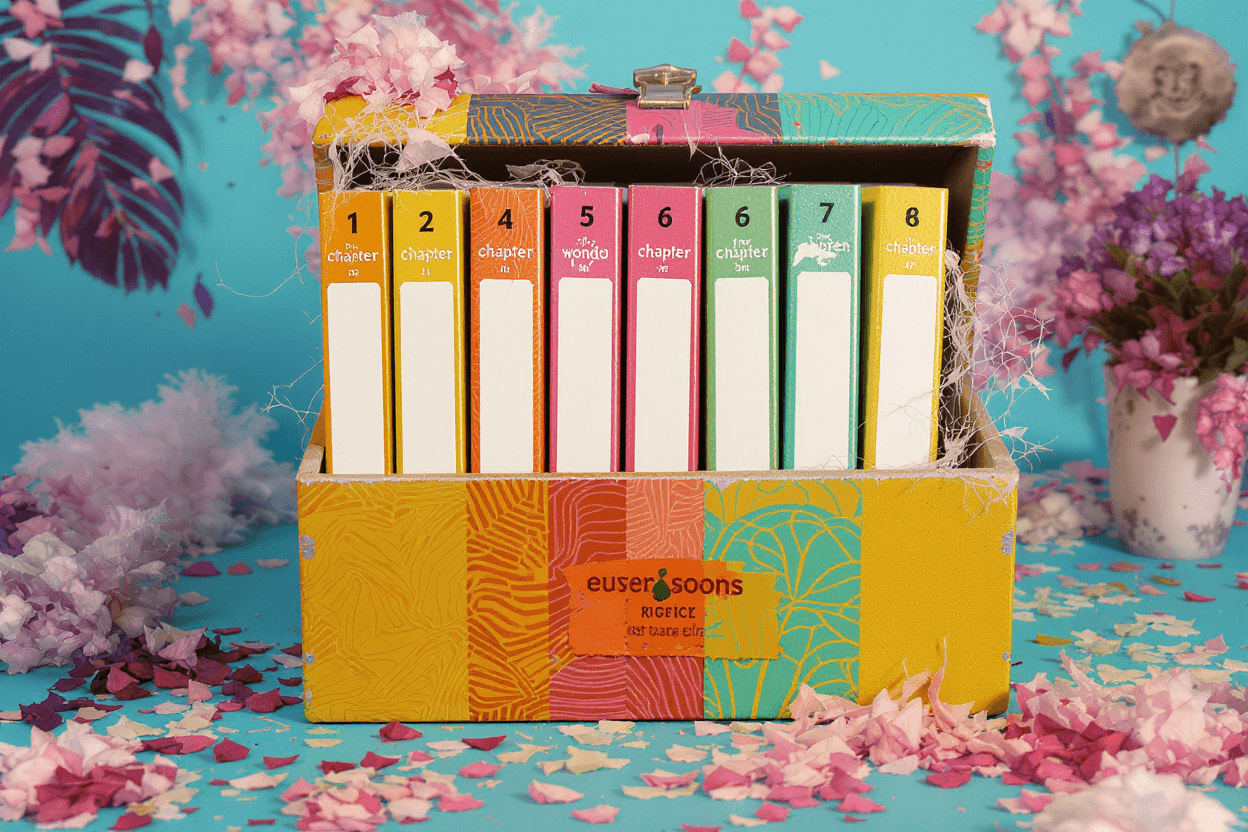
NONOL's stages run as chapters — SEASON 1, 2, 3. Same idea as a TV drama's season format. So a single stage doesn't end as one stray clip; it becomes one scene in a bigger story. Watching just one is lovely too, of course. But when you follow them in season order, you slowly start to notice a kind of grain running between one video and the next.
Why bundle them at all? A stage, by nature, tends to vanish once it's passed. The voice of that day, the lighting, the air that carried over from the other side of the screen — none of it comes around twice. But if you tidy those about-to-scatter moments into a season, a passing stage gets to stay as a record. Today's stage follows yesterday's, and calls out for tomorrow's. Since nothing gets ranked, a season isn't kept as 'who came in first' but as 'which songs we were keeping company with back then.'
What stays behind as a season
There's something nice about bundling by season. Which musicians passed through the playground in that stretch, what colors of stage there were most of — it all stays as a single grain. One season might have had an unusual number of quiet ballads; another might resemble a more restless, buzzing air. Nobody assigned this grain. It just arises on its own, once the stages pile up one by one.
So later, when you think of 'NONOL around SEASON 2,' the air of that season comes trailing along with it. The way replaying an album you loved, after a long while, brings back even the you of that time. A season is less a list of stages than an album that holds how we spent that season. And that album doesn't hold only the musicians who made the stages — the time of the people who listened along, in front of the screen, is quietly folded in too.
Today's warm-up checklist
- NONOL's stages run in seasons, like SEASON 1, 2, 3.
- A single stage isn't a stray clip but one scene in a bigger flow.
- A season holds that season's musicians, its mood, even its air.
Not letting a passing stage just pass, but keeping it as a season — that's how NONOL treats time. Which season is the playground moving through right now? Drop by for a bit today and find out. And as one scene in that season, I hope you'll be there together too.
Share
Sources
- 1.[노놀 공식] 노래하는 놀이터 : 노놀 NONOL ↗

NONOL Editorial
The NONOL Magazine editorial team — we hear it first, then pass it on.
Keep reading
A lullaby written for a friend with insomnia: four songs Choi Jae Heum sang at the rabbit playground
No drums or bass, just one guitar and a voice. From 'R', brought along as a demo, to a lullaby forgotten for two years and brought back. The last song became 'NONOL VOL 31'.
NONOL Editorial·
Strapping on a bass for the last song at the rabbit playground: four songs from heyseunghey
Drums that drop out after the intro and return at the second chorus, the camcorder from a music video, and a closer, 'waste', reworked with a cajón and acoustic guitars. It became 'NONOL VOL 30' the following year.
NONOL Editorial·
A late afternoon by a dinosaur slide: Jeong young ji puts down the guitar for 'Lullaby of Birdland'
No drums, no bass: four songs that start with acoustic guitar and keys and end with just keys and a voice. The last one, 'Whenever', became 'NONOL VOL 39' the following year.
NONOL Editorial·