
On chanting a sutra through electronic sound
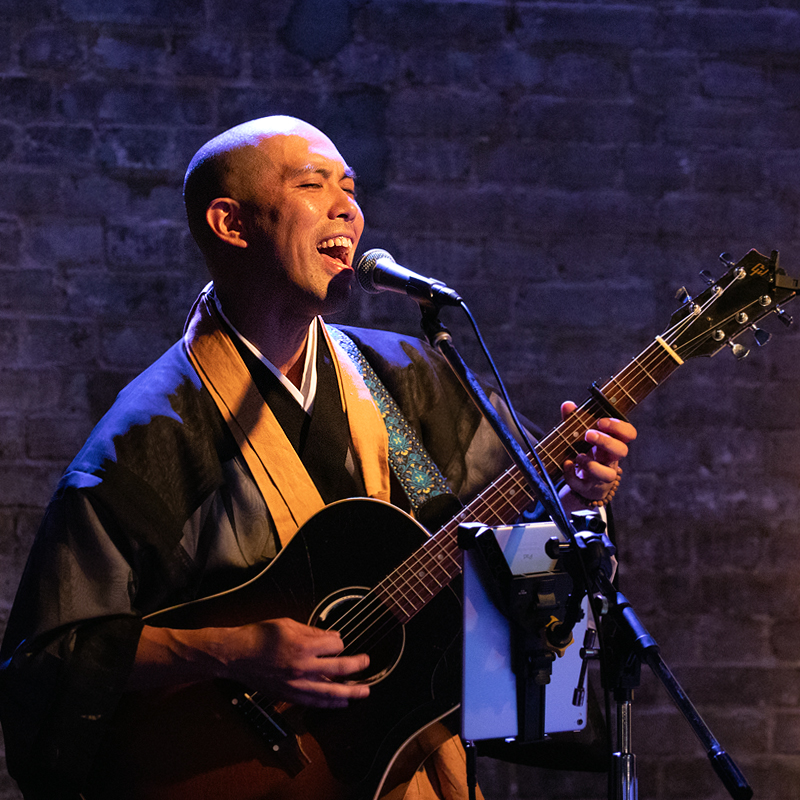
Kanho Yakushiji plays a first-ever Korean show on October 30. Yakushiji is a monk and a musician.


The Heart Sutra was made to be recited. It isn't a text you read; it's one you voice.
So putting music to it is nothing new. What's new is which music you put to it.
Show details
| Item | Detail |
|---|---|
| Artist | Kanho Yakushiji |
| Show | First Korean concert, 'Circle of Harmony' |
| Subtitle | Heart Sutra Music 10th anniversary world tour |
| Date | October 30, 7 p.m. |
| Venue | YES24 Wonderlock Hall, Seoul |
| Running time | About 100 minutes |
| Presenter | Jazz Bridge Company |
Someone who is both a monk and a musician
Kanho Yakushiji is a monk at a temple in Imabari, Japan, and also makes music.
The two occupations overlap. Chanting is a voiced act, with rhythm and pitch. Their purposes differ, though: chanting is practice, music is work.
When one person does both, that boundary blurs. Singing the Heart Sutra on a stage doesn't settle into practice or performance. Perhaps not settling it is the method.
Ten years, as a span
This show is the tenth-anniversary world tour of 'Heart Sutra Music'. Ten years of the same work.
Setting music to a sutra could have been a single attempt — try it like an experiment and move on.
Filling ten years means it wasn't an experiment. It became not one song but a method.
Choosing electronic music
Yakushiji renders the Heart Sutra in electronic music — not with wooden bells or traditional instruments.
There's a calculation in that. Traditional instruments connect back to the sound you'd hear in a temple, which returns you to the familiar. Electronic sound has no such link. It has nothing to do with scripture, so attaching it makes the text unfamiliar.
Making it unfamiliar may be the point. To make people hear a text again once it has become too familiar to notice, changing the sound is the fastest route.
A hundred minutes
The show runs about 100 minutes including an interval.
The Heart Sutra is short — a little over 260 characters in Chinese, a few minutes read aloud.
Filling 100 minutes with a text that short means repetition. And repetition is the original method of chanting: the practice isn't reading it once but continuing to read it.
Electronic music is also built on repetition. Two things with the same structure have met.
Tonight, try it like this
Read the Heart Sutra aloud once. You don't need the meaning — just feel the length and rhythm of the sound.
Then listen to Yakushiji's music and find where that sound sits inside it.
Last, consider the hundred minutes. The only way to make a short text long is repetition — and repetition was always how this text was handled.
Put sound to a text made for reciting: is that a new piece, or a return to the original method?
칸호야쿠시지KanhoYakushiji반야심경내한공연전자음악
Share
Sources
- 1.[연합뉴스] 전자음악으로 듣는 반야심경…日승려 뮤지션 간호 야쿠시지 내한 ↗
- 2.[스포츠경향] 종교·음악 경계 넘나드는 '1억뷰 승려' 칸호 야쿠시지, 첫 내한 ↗

NONOL Editorial
The NONOL Magazine editorial team — we hear it first, then pass it on.
Keep reading
Before 'GO HARD': a MEOVV starter guide, six scenes from 'MEOW' to 'DDI RO RI'
Ahead of the single album 'GO HARD' at 6 p.m. today, we picked six title tracks, from the debut song 'MEOW' to June's 'DDI RO RI', with one scene to watch first for each.
NONOL Editorial·
Five RESCENE songs on the Bugs weekly chart, for 10 weeks: scenes to watch first, from 'LOVE ATTACK' to 'Runaway'
Five of the 100 songs on the Bugs weekly chart for the last week of September are by RESCENE. In the 10th week of all five being in the top 100 together, we lay out the rank history and a scene to watch first in each song.
NONOL Editorial·
WE MEET, WE LEAVE, WE MEET AGAIN: 7 things you missed in I.O.I's 'Suddenly' music video
The title track of a mini album about a story that reconnected after ten years. As the drums drop out at 2:28, the ten stand in a row, and after 34 seconds of "la la la," 'WE MEET AGAIN' appears at 3:16.
NONOL Editorial·